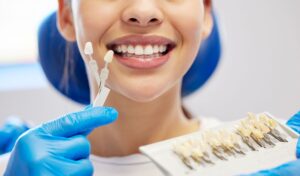
You’re not alone if you’re considering getting porcelain veneers to mask imperfections, such as stubborn stains, chips and cracks, or mild spacing issues, that can make you feel self-conscious about your smile. This popular cosmetic service involves placing customized ceramic shells over the fronts of your teeth to enhance your appearance and boost your confidence.
But that doesn’t mean they’re the right way to meet everyone’s unique needs. There are potential concerns associated with getting veneers that you should know about before proceeding. Continue reading to learn 3 potential side effects of getting veneers and how to handle them!
Concern #1: Irreversible Preparation
Although these restorations are usually only about 0.2 mm to 0.5 mm thick, it’s still necessary for your dentist to remove a small amount of enamel for them to fit correctly without looking bulky or leading to a misalignment or TMJ disorder. Unfortunately, the protective outer layer of your teeth doesn’t regenerate, and removing some leaves the affected teeth somewhat more vulnerable to damage, disease, and decay.
That means getting veneers involves making irreversible changes that slightly alter the strength and structure of your teeth. Fortunately, only a minimal amount of enamel is removed, and your prosthetics are durable enough to resist chipping and cracking to help protect the underlying teeth from potential harm.
Concern #2: Potential Sensitivity
If you’re worried that getting veneers will be an agonizing process, you can set your concerns aside. Your dentist will undoubtedly numb your mouth before preparing your teeth or cementing your shells in place to avoid potential pain, so there’s very little to worry about regarding the procedure itself.
With that said, some patients develop temporary sensitivity once their enamel has been thinned because sensations, like hot and cold temperatures, can travel more easily through the microscopic pores located there to trigger the tender nerves inside your teeth. Thankfully, this side effect is usually temporary and can often be managed with over-the-counter medications, such as ibuprofen or acetaminophen, until it fades on it own after a few days.
Concern #3: Changes to Speech Patterns
Despite the small dimensions of your one-of-a-kind veneers, they can potentially cause a lisp or other changes to your speech patterns, especially regarding “s”, “v”, or “th” sounds. This is because it can take your tongue and the other sensitive tissues in your mouth a few days or weeks to fully acclimate to their size and presence.
If you’ve developed altered speaking patterns during this transitional period, try not to panic. This can sometimes happen but is usually short-lived. Many patients find that these issues resolve themselves over time, though if it persists, you can let your dentist know. There’s a chance they can thin your restorations slightly to reduce the effect.
If you have other pressing questions or concerns about veneers or how they function, you can find the answers you seek by scheduling a consultation with your dentist!
Meet the Author
Dr. Spiro Saati has decades of experience helping patients improve their lives by enhancing their dental health. He earned his Doctor of Dental Medicine from the Boston University Goldman School of Dental Medicine, and has remained committed to continuing education to offer the most up-to-date treatment options, including porcelain veneers, using state-of-the-art technology. He also participates with professional organizations, such as the American Academy of Cosmetic Dentistry, so you can trust your smile is in good hands. You can request an appointment on the website or call the office at (978) 531-2185.